
skip to main content

Living as a disciple of Jesus

Chapter 1 - What does it mean to follow Jesus?

Following Jesus means more than simply knowing facts about Him. It means trusting Him, loving Him, obeying Him, and choosing every day to live the way He teaches us to live.

When Jesus walked on earth, He called ordinary people to follow Him. Some were fishermen. One collected taxes. Others came from simple homes and ordinary jobs. Jesus said to them, “Follow Me,” and their lives changed forever. They left behind their old ways and began learning from Him every day.

That is what a disciple is-a person who follows Jesus, learns from Him, and wants to become more like Him.

Today, Jesus still calls people to follow Him.

We cannot walk beside Him on the roads of Galilee like the first disciples did, but we follow Him by trusting His Word, obeying His commands, praying to Him, and shaping our lives around His truth. Following Jesus means He becomes the Leader of our lives-not just someone we admire from a distance.

Many people know about Jesus without truly following Him. They may go to church, hear Bible stories, or call themselves Christians, but following Jesus means more than simply knowing His name. A true disciple belongs to Jesus with heart, mind, and life.

Jesus said that anyone who wants to follow Him must deny themselves, take up their cross, and follow Him. This means we do not live for ourselves anymore. We live for Him. We choose His way over our own way, even when obedience is difficult.

Sometimes following Jesus means saying no to sin when others say yes.

Sometimes it means being kind when others are cruel.

Sometimes it means telling the truth when lying would be easier.

Sometimes it means trusting God when life is confusing or hard.

Following Jesus is not always easy-but it is always worth it.

Jesus never promised His followers an easy life. He promised to be with them. He promised to help them. He promised to guide them. And He promised that those who follow Him will have eternal life.

When we follow Jesus, He changes us little by little. We begin to love what He loves. We begin to hate sin more. We begin to care about others more deeply. We become more patient, more humble, more truthful, and more loving. This change does not happen all at once, but over time the Holy Spirit helps us grow.

Following Jesus also means learning from Him.

The disciples listened to Jesus teach. They watched how He treated people. They saw how He prayed, how He obeyed the Father, and how He loved even His enemies. In the same way, we learn from Jesus by reading Scripture and paying attention to His example.

The more we know Him, the more we can follow Him.

A disciple is not perfect. Even Jesus’ first disciples made mistakes. They doubted, argued, became afraid, and sometimes failed badly. But they kept following. They kept learning. They kept trusting Jesus even when they stumbled.

That is encouraging for us.

Following Jesus does not mean we never fail. It means that when we fail, we return to Him, ask forgiveness, and keep walking with Him.

Every Christian is a disciple. There are no “special” followers and “ordinary” followers. If you belong to Jesus, He calls you to follow Him every day-in your home, at school, with friends, in private, and in public.

To follow Jesus is to say:

“Jesus, You are my Lord.

You are my Teacher.

You are my King.

I will trust You.

I will obey You.

I will go where You lead.”

That is the heart of discipleship.

And the wonderful truth is this: when we follow Jesus, we are following the best Leader anyone could ever have.

He is wise.

He is loving.

He is holy.

He is faithful.

He never leads His people the wrong way.

So what does it mean to follow Jesus?

It means giving Him your whole life,

trusting Him as your Savior,

obeying Him as your Lord,

learning from Him as your Teacher,

and walking with Him every day.

That is what it means to be His disciple.

Big truth to remember:

A disciple is someone who trusts Jesus, obeys Jesus, and follows Him every day.

Think about it:

Are you truly following Jesus, or do you only know about Him?

Memory verse:

Then Jesus told His disciples, “If anyone would come after me, let him deny himself and take up his cross and follow me.” - Matthew 16:24

Prayer:

Lord Jesus, thank You for calling people to follow You. Help me to trust You, obey You, and learn from You every day. Make me into a faithful disciple who loves You and follows wherever You lead. Amen.

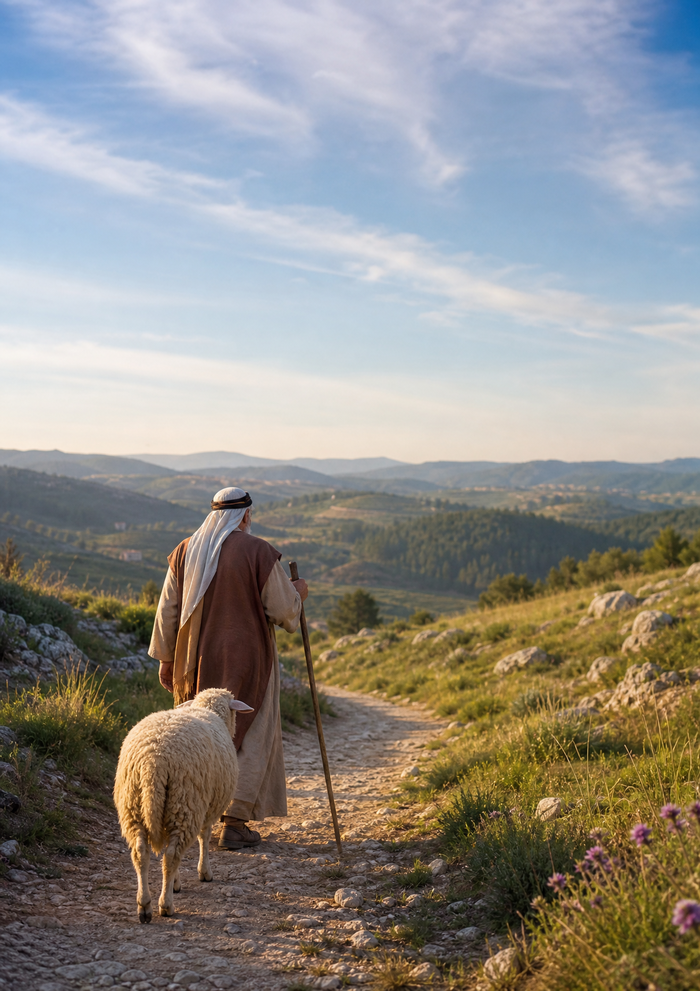
Chapter 2 - Counting the cost of following Jesus

Following Jesus is the greatest decision anyone can ever make-but Jesus taught that we should understand what it means before we say we will follow Him.

Large crowds often gathered around Jesus. Many people liked hearing Him teach. Many were amazed by His miracles. Some followed Him because they hoped He would feed them, heal them, or make life easier.

But Jesus knew that many people wanted the blessings of being near Him without truly wanting to belong to Him.

So Jesus spoke plainly. He told the crowds that following Him would cost something.

He said that anyone who follows Him must love Him more than anyone else-even more than father, mother, brothers, sisters, and their own life. Jesus was not teaching that we should stop loving our families. He was teaching that our love for Him must come first. No one and nothing should matter more to us than Christ.

Jesus also said that His followers must carry their cross.

In Jesus’ day, a cross was not a decoration. It was a symbol of suffering, shame, and death. To carry your cross meant being willing to give up everything-even your comfort, your plans, your reputation, and your safety-to obey Jesus.

That is serious language.

Jesus wanted people to know that following Him is not casual. It is not something we do halfway. It is not simply adding a little religion to our lives while keeping control of everything else.

Following Jesus means surrender.

Jesus gave two examples to explain this.

First, He spoke of a man building a tower. Before beginning, the man must count the cost to make sure he has enough money to finish it. Otherwise, he may start building and then fail to complete the work.

Second, Jesus spoke of a king preparing for war. Before going into battle, the king must consider whether his army is strong enough to win. He must think carefully before acting.

In the same way, Jesus taught that people should understand what discipleship requires.

To follow Jesus means giving Him everything.

Our time belongs to Him.

Our choices belong to Him.

Our future belongs to Him.

Our possessions belong to Him.

Our relationships belong to Him.

Our whole lives belong to Him.

Some people hear this and think, “That sounds too hard.”

And they are right-it is hard.

Following Jesus may cost friendships if others mock your faith.

It may cost popularity if obedience makes you stand apart.

It may cost comfort when doing right is difficult.

It may cost opportunities when faithfulness requires saying no.

In some places of the world, following Jesus can even cost a person their freedom or life.

Jesus never hid this truth.

He did not trick people into discipleship by promising an easy life. He told the truth from the beginning: following Him costs much.

But He also taught something even more important-

Whatever we give up for Jesus is worth it.

Jesus said that anyone who loses his life for Christ’s sake will find it. This means that when we give our lives to Jesus, we do not lose what matters most-we gain far more than we give up.

We gain forgiveness.

We gain peace with God.

We gain eternal life.

We gain fellowship with Christ.

We gain treasure in heaven.

We gain joy that cannot be taken away.

Many Christians throughout history have suffered greatly for following Jesus, yet they would all say the same thing:

Jesus is worth it.

Why?

Because there is no greater treasure than knowing Him.

Sometimes people think being a Christian means trying to fit Jesus into their life somewhere-like adding one more activity to an already busy schedule.

But Jesus does not ask for part of our lives.

He asks for all of it.

He is not one priority among many.

He is Lord over everything.

This does not mean we follow Him perfectly. Every Christian struggles, stumbles, and sometimes fails. But true disciples keep turning back to Jesus and choosing Him again and again.

To count the cost means asking ourselves honestly:

Am I willing to obey Jesus even when it is hard?

Am I willing to trust Him even when I do not understand?

Am I willing to put Him first above everything else?

Am I willing to follow Him no matter what?

These are serious questions because discipleship is serious.

But here is the wonderful truth:

The One who calls us to follow Him is also the One who helps us follow Him.

Jesus does not ask us to walk this road alone. He gives us His Spirit, His Word, His church, and His promises. He strengthens His people when discipleship feels difficult.

When we remember who Jesus is-our Savior, our King, our greatest treasure-we realize that no sacrifice for Him is wasted.

Following Jesus may cost us much.

But not following Him costs far more.

So count the cost carefully.

Then follow Him gladly.

Because Jesus is worth everything.

Big truth to remember:

Following Jesus costs much-but He is worth everything.

Think about it:

What things might tempt you to put something ahead of Jesus in your life?

Memory verse:

“So therefore, any one of you who does not renounce all that he has cannot be my disciple.” - Luke 14:33

Prayer:

Lord Jesus, help me to love You more than anything else. Give me courage to follow You even when it is hard. Teach me to trust that You are worth every sacrifice. Amen.

Chapter 3 - Learning to obey Jesus

To follow Jesus means more than admiring Him. It means obeying Him.

Many people say they love Jesus, but Jesus Himself taught that real love for Him is shown by obedience. He said, “If you love me, you will keep my commandments.” In other words, obedience is one of the clearest signs that someone truly belongs to Him.

Obedience matters because Jesus is not only our Savior-He is also our Lord.

A lord is a ruler, a master, a king. When we trust in Jesus, we are not simply accepting His help while continuing to run our own lives. We are submitting to His authority. We are saying, “Jesus, You are in charge now.”

That means disciples do not ask, “What do I want to do?”

They ask, “What does Jesus want me to do?”

Obeying Jesus begins with hearing His Word.

We cannot obey commands we do not know. That is why reading the Bible is so important for every Christian. In Scripture, Jesus teaches us how to live, what to believe, what to love, and what to avoid.

The Bible shows us:

  • How to treat others
  • How to speak truthfully
  • How to fight sin
  • How to forgive
  • How to pray
  • How to trust God
  • How to love our enemies
  • How to live wisely

God has not left His people guessing about what obedience looks like. He has spoken clearly in His Word.

But knowing God’s commands is not enough.

A person can read the Bible every day and still disobey God. Jesus warned about this when He said that wise people are those who hear His words and do them. It is not enough to listen to truth. We must act on it.

Imagine a child whose parent says, “Please clean your room.”

The child replies, “I heard you. I understand your instructions. I even memorized what you said.”

But if the room remains messy, that child has not obeyed.

In the same way, hearing Jesus’ commands without obeying them is not true discipleship.

Of course, obedience is not always easy.

Sometimes Jesus commands us to forgive when we want revenge.

Sometimes He tells us to tell the truth when lying seems easier.

Sometimes He calls us to be humble when we want attention.

Sometimes He asks us to trust Him when we feel afraid.

Obedience often requires choosing God’s way over our feelings.

That is why obedience is an act of faith.

Every time we obey Jesus, we are saying:

“I trust that Your way is better than mine.”

And His way is always better.

God never gives commands to make our lives worse. His commands are wise, loving, and good. Even when obedience feels hard, God’s way leads to blessing, joy, and spiritual growth.

Still, every Christian struggles with obedience because we still battle sin.

Even after becoming Christians, we sometimes want our own way. We are tempted to disobey. We fail. We stumble. We sin.

But disciples do not give up when they fail.

They confess their sin.

They ask forgiveness.

They turn back to Jesus.

And they keep learning to obey.

Obedience is not about being perfect. It is about faithfully following Jesus, repenting when we fail, and growing over time.

The Holy Spirit helps us obey.

Before someone becomes a Christian, they cannot truly please God from the heart. But when we trust in Christ, God gives us His Spirit to live within us. The Holy Spirit changes our hearts so that we begin to want to obey God more and more.

He helps us understand Scripture.

He convicts us when we sin.

He strengthens us to do what is right.

He produces godly character in us.

This means obedience is not simply trying harder-it is depending on God’s help.

And the more we obey Jesus, the more we grow.

Obedience strengthens our faith.

It deepens our trust.

It brings peace to our conscience.

It shapes our character.

It makes us more like Christ.

Step by step, day by day, obedience helps us become mature disciples.

So when you face choices each day-at home, at school, with friends, online, or when no one else is watching-ask yourself:

“What would Jesus want me to do here?”

Then trust Him enough to obey.

Because disciples do not merely hear Jesus.

They follow Him.

Big truth to remember:

A true disciple shows love for Jesus by obeying Him.

Think about it:

Is there an area of your life where you know Jesus wants you to obey Him more faithfully?

Memory verse:

“If you love me, you will keep my commandments.” - John 14:15

Prayer:

Lord Jesus, thank You for being a good and wise King. Help me to obey You gladly and trust that Your way is always best. Forgive me when I fail, and help me grow into a faithful disciple. Amen.

Chapter 4 - Trusting Jesus every day

Following Jesus is not only about obeying Him. It is also about trusting Him.

A disciple does not simply believe that Jesus exists. A disciple trusts Him with real life-every day, in every situation.

To trust Jesus means believing that He is who He says He is, that His promises are true, and that His ways are always right. It means relying on Him instead of relying only on ourselves.

This can be difficult because many people prefer to trust what they can see.

We trust our own plans.

We trust our own feelings.

We trust our own understanding.

We trust what seems easiest or safest.

But disciples learn to trust Jesus even when they do not fully understand what He is doing.

That is real faith.

Think about Jesus’ disciples in the Gospels.

When He told them to leave their fishing nets and follow Him, they had to trust Him.

When He sent them out to preach, they had to trust Him.

When storms came while they were in the boat, they had to trust Him.

When Jesus was arrested and crucified, they had to trust Him even when everything looked confusing and frightening.

Again and again, Jesus taught His followers to trust Him-not only when life made sense, but especially when it did not.

The same is true for us.

Sometimes we trust Jesus when:

  • We are afraid about the future
  • We do not understand why hard things happen
  • We feel lonely
  • We are waiting for prayers to be answered
  • We must obey when it costs us something
  • We cannot see what God is doing

Trusting Jesus means believing that He is still good, wise, and faithful even when life is hard.

That is not blind faith.

We trust Jesus because of who He is.

He is the Son of God.

He is perfectly wise.

He never lies.

He never makes mistakes.

He loves His people completely.

He has proven His love at the cross.

If Jesus loved us enough to die for our sins, then we can trust Him with everything else.

Trusting Jesus does not mean pretending life is easy.

It does not mean never feeling afraid.

It does not mean never having questions.

Even faithful Christians sometimes struggle with fear and doubt.

Trust means choosing to believe God’s truth even while we wrestle with those feelings.

Sometimes trust looks like praying:

“Lord, I am afraid-but I believe You are with me.”

Sometimes trust looks like obeying:

“I do not understand why You ask this of me, but I will obey.”

Sometimes trust looks like waiting:

“I do not know why the answer is delayed, but I will keep depending on You.”

This kind of trust grows over time.

The more we learn God’s character, the more we trust Him.

The more we remember His faithfulness in the past, the more we trust Him in the future.

The more we walk with Him through trials, the stronger our faith becomes.

That is one reason God sometimes allows difficult things in our lives.

Hard seasons teach us to trust Him more deeply.

When everything is easy, we may forget our need for God.

But when life is difficult, we learn to lean on Him.

Trusting Jesus every day means bringing every part of life to Him:

  • Our worries
  • Our hopes
  • Our decisions
  • Our struggles
  • Our joys
  • Our future

Nothing is too small or too big for His care.

A disciple learns to say:

“Jesus, I trust You with today.

I trust You with my future.

I trust You when life is joyful.

I trust You when life is painful.

I trust You even when I do not understand.”

And here is the wonderful truth:

Jesus has never failed anyone who trusted in Him.

He is always faithful.

Always wise.

Always loving.

Always worthy of trust.

So disciples do not follow Jesus only when life is easy.

They trust Him every day-

in sunshine and storms,

in joy and sorrow,

in certainty and confusion.

Because the One they follow can always be trusted.

Big truth to remember:

A disciple trusts Jesus even when life is hard or confusing.

Think about it:

What is something in your life right now that you need to trust Jesus with?

Memory verse:

“Trust in the Lord with all your heart, and do not lean on your own understanding.” - Proverbs 3:5

Prayer:

Lord Jesus, help me trust You more each day. When I feel afraid, confused, or worried, remind me that You are wise, loving, and faithful. Teach me to depend on You in every part of life. Amen.

Chapter 5 - Becoming more like Jesus

When someone follows Jesus, something begins to change inside them.

A disciple does not simply believe certain truths about Jesus and then stay exactly the same. Over time, Jesus changes His followers so that they become more like Him.

This process is called spiritual growth.

The Bible teaches that God’s plan for every Christian is to be shaped into the likeness of His Son. That means disciples are meant to grow in character, attitudes, desires, and actions so that they reflect Jesus more and more.

Of course, this change does not happen instantly.

When someone first becomes a Christian, they do not suddenly become perfect. They still struggle with sin. They still have wrong attitudes. They still have habits that need to change. They still have much to learn.

But true disciples do not remain unchanged.

Little by little, year by year, Jesus transforms them.

Think of a tree growing.

You cannot watch it grow in a single moment. The change is slow and steady. Yet over time it becomes taller, stronger, and more fruitful.

Spiritual growth often works the same way.

Sometimes we may not notice much change day by day. But as we keep following Jesus, reading His Word, praying, obeying, and trusting Him, He gradually shapes us into mature disciples.

What does becoming like Jesus look like?

It means growing in qualities such as:

  • Love
  • Patience
  • Kindness
  • Humility
  • Truthfulness
  • Gentleness
  • Self-control
  • Faithfulness

These qualities are often called the fruit of the Spirit because they are produced in believers by the Holy Spirit.

Jesus changes not only what we do-but what we want.

Before becoming Christians, people naturally love sin more than holiness. But as disciples grow, they begin to hate sin more and love righteousness more. They begin to care more about pleasing God than pleasing themselves.

That does not mean temptation disappears.

Even mature Christians still fight sin. The difference is that disciples now want to resist sin and grow in holiness.

Growth also means becoming more like Jesus in how we treat others.

  • Jesus was compassionate.
  • He was patient.
  • He served others.
  • He spoke truth.
  • He forgave.
  • He loved sacrificially.

As disciples grow, they begin to reflect these same qualities in their relationships-with family, friends, neighbors, and even enemies.

Sometimes growth happens through joyful things.

God uses worship, prayer, Scripture, fellowship, and encouragement to help us grow.

But often growth happens through difficult things too.

God uses suffering, disappointment, correction, and hardship to shape our character.

Just as muscles grow stronger through resistance, faith often grows stronger through trials.

This is why hard seasons can produce deep spiritual maturity when we trust God through them.

Still, spiritual growth requires effort.

We do not make ourselves grow by our own strength, but disciples are called to actively pursue growth.

We should:

  • Read Scripture regularly
  • Pray faithfully
  • Gather with God’s people
  • Confess sin quickly
  • Serve others gladly
  • Practice obedience daily

These habits do not earn God’s love. Rather, they place us where God often does His shaping work.

Sometimes Christians become discouraged because they do not feel they are growing fast enough.

But growth is often slower than we wish.

The important question is not:

  • “Am I perfect yet?”

The important question is:

  • “Am I becoming more like Jesus over time?”

Even small growth matters.

  • If you are fighting sin more than before,
  • loving others more than before,
  • trusting God more than before,
  • and longing for holiness more than before-

that is evidence of God’s work in you.

One day this process will be complete.

When Jesus returns-or when believers go to be with Him-they will be made perfectly holy forever. Sin will be gone. Spiritual growth will be finished. God’s people will become fully like Christ in holiness.

Until then, disciples keep growing.

  • Slowly.
  • Steadily.
  • Faithfully.

So do not grow discouraged.

Keep following Jesus.

Keep trusting His Spirit.

Keep pursuing holiness.

Because every faithful step is part of God’s work of making you more like His Son.

Big truth to remember:

A disciple grows over time to become more like Jesus.

Think about it:

In what ways do you think Jesus is helping you grow right now?

Memory verse:

“And we all… are being transformed into the same image from one degree of glory to another.” - 2 Corinthians 3:18

Prayer:

Lord Jesus, thank You for changing Your people to become more like You. Help me grow in love, holiness, and obedience. Shape my heart and life so that others can see Your work in me. Amen.

Chapter 6 - Following Jesus together

Jesus never intended His followers to live the Christian life alone.

When He called people to follow Him, He gathered them into a group of disciples. They learned together, traveled together, worshiped together, and helped one another grow. In the same way, Christians today are meant to follow Jesus together as part of His church.

Some people think they can follow Jesus entirely on their own.

  • They may say, “I believe in Jesus, but I do not need church.”
  • Or, “My faith is private-I can worship God by myself.”

While it is true that we can pray alone and read the Bible alone, the Christian life was never meant to be lived in isolation.

God designed His people to need one another.

The Bible describes the church as the body of Christ. Just as a human body has many parts that work together, Christians are meant to live and serve together. No believer has everything they need within themselves. We all need help, encouragement, teaching, correction, and support from other followers of Jesus.

Following Jesus together means worshiping with other believers.

When Christians gather, they sing praises to God, hear His Word preached, pray together, and remember the gospel. These gatherings strengthen our faith and remind us that we belong to something bigger than ourselves.

Following Jesus together also means encouraging one another.

Every Christian has hard days.

  • Days when faith feels weak.
  • Days when temptation feels strong.
  • Days when suffering feels heavy.

In those moments, other believers can remind us of God’s truth, pray for us, and help us keep going.

Sometimes we need others to encourage us.

Sometimes God uses us to encourage them.

Following Jesus together means learning from one another.

  • Older Christians can teach younger Christians.
  • Mature believers can help newer believers.
  • Wise friends can offer counsel when we are confused.

God often uses His people to help His people grow.

Following Jesus together also means serving one another.

Jesus taught His disciples to love one another deeply. In the church, believers care for one another’s needs, show hospitality, bear burdens, and use their gifts to help the body of Christ.

  • Some serve by teaching.
  • Some by helping.
  • Some by encouraging.
  • Some by giving.
  • Some by leading.
  • Some by showing mercy.

Every believer has a part to play.

Of course, following Jesus with others is not always easy.

Churches are made up of sinners.

That means people sometimes disappoint one another.

  • Misunderstandings happen.
  • Feelings get hurt.
  • Conflicts arise.

But even this is part of discipleship.

Learning to forgive, show patience, bear with others, and pursue peace helps us grow more like Christ.

A church does not need to be perfect to be useful.

There are no perfect churches because there are no perfect people.

Still, God uses imperfect churches to strengthen His people.

That is why gathering with God’s people matters so much.

When Christians stay disconnected from church for long periods, they often become spiritually weaker. Without encouragement and accountability, it becomes easier to drift from obedience and faithfulness.

A coal removed from a fire grows cold.

But coals kept together burn brightly.

The same is often true for Christians.

Being part of a faithful church helps disciples stay spiritually strong.

This is why following Jesus is both personal and shared.

  • Each person must trust Christ personally.
  • Each person must obey Him personally.

But no one is meant to walk the road of discipleship alone.

God gives us His family-the church-to help us follow Him well.

So if you belong to Jesus:

  • Love His people.
  • Serve His church.
  • Learn from other believers.
  • Encourage fellow disciples.
  • Stay committed to gathering with God’s people.

Because disciples grow stronger when they follow Jesus together.

Big truth to remember:

Jesus calls His disciples to follow Him together as part of His church.

Think about it:

How can other Christians help you follow Jesus more faithfully?

Memory verse:

“And let us consider how to stir up one another to love and good works, not neglecting to meet together…” - Hebrews 10:24–25

Prayer:

Lord Jesus, thank You for giving Your people the church. Help me love other believers, learn from them, encourage them, and grow together with them as we follow You. Amen.

Chapter 7 - Serving others like Jesus

Jesus did not come to be served-He came to serve.

Though He is the Son of God and King over all creation, Jesus humbled Himself to help others. He healed the sick, cared for the hurting, fed the hungry, welcomed children, and showed compassion to those others ignored. He even washed His disciples’ feet like a servant.

Then He told His followers to do the same.

To be a disciple of Jesus means learning not only to believe like Him and obey like Him, but also to serve like Him.

Many people in the world think greatness means being important, powerful, admired, or in charge. They want others to serve them.

But Jesus taught something very different.

He said that whoever wants to be great must become a servant.

In God’s kingdom, greatness is not measured by how many people serve you-

but by how willingly you serve others.

Serving means using your time, energy, gifts, and resources to help others for God’s glory.

Sometimes service looks big and noticeable.

Often it looks small and ordinary.

Serving may mean:

  • Helping a parent without being asked
  • Encouraging a sad friend
  • Sharing with someone in need
  • Welcoming someone who feels left out
  • Helping at church
  • Praying for others
  • Giving generously
  • Doing unnoticed tasks with a joyful heart

Many acts of service seem small to people-but they matter greatly to God.

Jesus sees every act of faithful service, even when no one else notices.

Serving others can be difficult because our sinful hearts naturally think about ourselves first.

We often ask:

  • “What do I want?”
  • “What is easiest for me?”
  • “How does this affect me?”

But disciples learn to ask different questions:

  • “How can I help?”
  • “How can I encourage?”
  • “How can I love this person well?”
  • “How can I serve like Jesus here?”

Service requires humility.

A proud person wants recognition.

A humble person is willing to do even lowly tasks if it helps others.

Jesus showed this perfectly when He washed His disciples’ feet. In that culture, foot-washing was work usually done by servants. Yet the King of kings willingly knelt down and did it Himself.

If Jesus was willing to serve in humility, then none of His followers should think any act of service is beneath them.

Serving also requires sacrifice.

  • Sometimes serving others costs us time.
  • Sometimes it costs comfort.
  • Sometimes it interrupts our plans.
  • Sometimes it feels inconvenient.

But love often requires inconvenience.

Jesus’ entire earthly life was one long act of sacrificial service. And His greatest act of service was giving His life on the cross to save sinners.

When disciples serve others, they reflect the heart of Christ.

Service is not something Christians do only when they feel like it.

It is part of daily discipleship.

  • At home, disciples serve their families.
  • At church, disciples serve God’s people.
  • At school, disciples serve classmates.
  • In the community, disciples serve neighbors.

Everywhere they go, disciples look for opportunities to love through service.

And here is something wonderful:

Serving others often brings joy.

Though service can be hard, God frequently fills His people with joy as they help others. There is deep happiness in forgetting yourself for a while and loving people well.

Why?

Because serving makes us more like Jesus.

The more we serve with humble, joyful hearts, the more we reflect the One we follow.

So do not wait until you are older to begin serving.

  • Children can serve.
  • Students can serve.
  • Every disciple can serve.

Ask God each day:

  • “Lord, show me someone I can help today.”

Then be ready.

Because disciples of Jesus do not live only for themselves.

They gladly serve others like their Savior did.

Big truth to remember:

A disciple of Jesus serves others with humility and love.

Think about it:

Who is someone you could serve this week in a practical way?

Memory verse:

“For even the Son of Man came not to be served but to serve…” - Mark 10:45

Prayer:

Lord Jesus, thank You for serving others with humility and love. Help me to follow Your example by serving people gladly, even in small and unnoticed ways. Make my heart more like Yours. Amen.

Chapter 8 - Loving others as Jesus loves

One of the clearest marks of a true disciple is love.

Jesus told His followers that people would know they belong to Him by the way they love one another. Christians are not identified mainly by the clothes they wear, the church they attend, or the words they say. They are identified by love.

But what kind of love did Jesus mean?

  • Not the weak kind of love that changes with feelings.
  • Not the selfish kind of love that only helps when it is convenient.
  • Not the pretend kind of love that speaks kindly but never sacrifices.

Jesus calls His disciples to love as He loves.

That is a much deeper kind of love.

Jesus loved people with compassion.

  • He cared for the hurting.
  • He welcomed the outcast.
  • He spoke truth even when it was difficult.
  • He forgave those who sinned against Him.
  • He gave His life for sinners at the cross.

This is the model for Christian love.

To love others like Jesus means caring about their good, even when it costs us something.

  • Sometimes love is warm and gentle.
  • Sometimes love is patient and forgiving.
  • Sometimes love means helping someone in need.
  • Sometimes love means telling the truth kindly when someone is doing wrong.

Real love seeks what is best for others-not merely what is easiest or most comfortable.

This kind of love begins in the heart.

We naturally tend to love people who are kind to us, fun to be around, or similar to us. But Jesus calls His followers to love beyond that.

He teaches us to love:

  • Friends and family
  • People who seem different from us
  • Those who are difficult to love
  • Those who hurt us
  • Even our enemies

That is one of the hardest commands in all of Scripture.

Loving enemies does not mean pretending evil is acceptable.

It does not mean ignoring wrongdoing.

It means refusing hatred, seeking good rather than revenge, and treating even difficult people with mercy and truth.

Why should disciples love this way?

Because this is how Jesus has loved us.

Before we trusted Christ, we were sinners opposed to God.

Yet Jesus loved us.

He pursued us.

He died for us.

He showed mercy when we deserved judgment.

When we remember how much we have been loved by Christ, it helps us love others with greater grace.

Still, loving others is not always easy.

  • People disappoint us.
  • Friends fail us.
  • Family members hurt us.
  • Others may mock, ignore, or mistreat us.

In those moments, Christian love becomes especially important.

Anyone can love when it is easy.

Disciples love even when it is hard.

This requires the help of the Holy Spirit.

Left to ourselves, we will often choose selfishness, bitterness, or anger. But God’s Spirit produces love in the hearts of His people and helps them show the love of Christ.

Love is not only something we feel.

It is something we do.

We love through:

  • Kind words
  • Patient listening
  • Helpful actions
  • Forgiveness
  • Generosity
  • Prayer
  • Encouragement
  • Truth spoken with grace

Sometimes the smallest acts of love can have great impact.

  • A kind word to someone discouraged.
  • A welcoming smile to someone lonely.
  • A quiet act of help when no one notices.
  • A choice to forgive when hurt.

These simple acts reflect the love of Christ.

Jesus loved perfectly.

We do not.

But disciples are called to keep growing in love.

Each day we should ask:

  • “How can I love others the way Jesus has loved me?”

And when we fail, we ask forgiveness and keep trying again.

Because the more we know the love of Jesus, the more we will want to share that love with others.

So love deeply.

  • Love sacrificially.
  • Love truthfully.
  • Love patiently.
  • Love even when it is difficult.

Because disciples of Jesus love as their Savior loves.

Big truth to remember:

A disciple loves others with the same kind of love Jesus shows His people.

Think about it:

Who is someone difficult for you to love right now, and how could you show them Christlike love?

Memory verse:

“A new commandment I give to you, that you love one another: just as I have loved you…” - John 13:34

Prayer:

Lord Jesus, thank You for loving me with perfect love. Help me to love others the way You love-patiently, truthfully, humbly, and sacrificially. Fill my heart with Your love each day. Amen.

Chapter 9 - Telling others about Jesus

Jesus never meant for His disciples to keep the good news to themselves.

After rising from the dead, Jesus gave His followers an important command: go and make disciples of all nations. This means every Christian is called to help others know about Jesus and follow Him too.

Telling others about Jesus is often called evangelism or witnessing.

That may sound like a big or difficult word, but the meaning is simple:

It means sharing the good news of who Jesus is and what He has done.

The gospel is the best news in the world.

God made us to know Him and love Him.

But all people have sinned against God.

Sin separates us from Him and deserves judgment.

Yet God sent His Son, Jesus, to live perfectly, die for sinners, and rise again.

Anyone who repents and trusts in Jesus can be forgiven and have eternal life.

That message changes lives forever.

Because the gospel is such good news, disciples should want others to hear it.

Imagine discovering the cure for a deadly disease.

Would you keep it secret?

Of course not.

In the same way, Christians have received the message of eternal life. Love should move us to share it.

Still, many believers find evangelism difficult.

We may feel nervous.

We may fear saying the wrong thing.

We may worry about being laughed at.

We may not know how to begin.

Even faithful Christians sometimes feel afraid to speak about Jesus.

But courage does not mean never feeling fear.

It means obeying God even when we feel afraid.

Remember: Jesus does not ask us to save anyone.

Only God can change hearts.

Our responsibility is simply to speak faithfully.

God is the One who opens eyes, softens hearts, and brings people to faith.

That truth removes much pressure.

We do not need to be perfect speakers.

We do not need to know the answer to every question.

We do not need to force anyone to believe.

We simply need to speak truthfully, lovingly, and clearly about Jesus.

There are many ways to tell others about Him.

  • You can explain the gospel directly.
  • You can share how Jesus has changed your life.
  • You can invite someone to church.
  • You can answer questions about your faith.
  • You can offer to read the Bible with someone.
  • You can speak about Christ naturally in everyday conversations.

Children can tell others about Jesus too.

You do not need to be an adult, a pastor, or a missionary to witness.

You can speak about Jesus to friends, classmates, neighbors, teammates, and family members.

Sometimes your words matter most.

Sometimes your example helps open doors.

When others see kindness, honesty, joy, and love in your life, they may become curious about why you live differently. Then you can point them to Christ.

Still, our actions alone are not enough.

People must hear the message of the gospel.

No one is saved merely by seeing kindness.

They must hear about Jesus.

That is why disciples use both words and actions:

living in a way that honors Christ and speaking the truth about Him.

Not everyone will respond positively.

Some people may ignore the message.

Some may reject it.

Some may mock it.

Jesus warned that this would happen.

But others will listen.

Some will believe.

And God may use your faithful witness to help lead someone to salvation.

What a privilege that is.

Think about it:

The God of the universe allows His people to take part in sharing His saving message.

That is an incredible responsibility and joy.

So pray for courage.

Pray for opportunities.

Pray for wisdom.

Pray for the people you know who need Jesus.

Then be ready to speak.

Because disciples do not keep the gospel to themselves.

They gladly tell others about the Savior they love.

Big truth to remember:

A disciple tells others the good news about Jesus.

Think about it:

Who in your life needs to hear about Jesus, and how could you begin sharing with them?

Memory verse:

“Go therefore and make disciples of all nations…” - Matthew 28:19

Prayer:

Lord Jesus, thank You for saving me. Help me to love others enough to tell them about You. Give me courage, wisdom, and opportunities to share the good news of the gospel. Amen.

Chapter 10 - Persevering in following Jesus

Following Jesus is not something we do for a day, a week, or a little while.

Discipleship is a lifelong journey.

Jesus calls His people not only to begin following Him, but to keep following Him faithfully until the end. This is called perseverance-continuing in faith and obedience even when life becomes difficult.

Many people start things with excitement but struggle to keep going.

A child may begin learning an instrument and then quit when practice becomes hard.

A runner may start training but stop when the workouts become painful.

A student may begin a project eagerly but lose motivation before it is finished.

The same can happen spiritually.

Some people seem eager to follow Jesus at first, but when obedience becomes difficult, when suffering comes, or when distractions appear, they drift away.

Jesus warned about this in the Parable of the Sower.

Some seeds sprang up quickly but withered because they had no deep roots.

Others were choked by thorns.

Only the good soil produced lasting fruit.

Jesus was teaching that true disciples continue following Him over time.

Perseverance does not mean Christians never struggle.

Real disciples may face:

  • Doubt
  • Temptation
  • Suffering
  • Persecution
  • Discouragement
  • Spiritual dryness
  • Seasons of grief or confusion

Sometimes following Jesus feels joyful and easy.

Other times it feels difficult and costly.

Persevering means continuing to trust and obey Him through all of it.

Why is perseverance hard?

Because the Christian life is a battle.

We fight against sin within us.

We face temptations from the world around us.

We have an enemy, the devil, who wants to draw us away from Christ.

Disciples must learn to keep standing firm.

How do we persevere?

We persevere by staying close to Jesus.

  • We keep reading Scripture.
  • We keep praying.
  • We keep gathering with God’s people.
  • We keep confessing sin.
  • We keep trusting God’s promises.
  • We keep obeying one step at a time.

Perseverance usually happens through many small acts of faithfulness.

  • Choosing obedience today.
  • Choosing prayer today.
  • Choosing trust today.
  • Choosing repentance today.
  • Choosing faithfulness today.

Day by day, those choices build a life of perseverance.

But here is an important truth:

Christians persevere not only because they hold onto Jesus-

but because Jesus holds onto them.

If salvation depended on our strength alone, no one would last.

But Jesus promises to keep His people.

He guards them.

He strengthens them.

He finishes the work He began in them.

This means disciples persevere by God’s power, not merely their own effort.

That truth gives great comfort.

When believers feel weak, they can remember:

“My Savior is stronger than my weakness.”

Even when Christians stumble badly, true disciples do not stay down forever.

God brings them back.

He restores them.

He keeps them moving forward.

Perseverance does not mean never failing.

It means never finally giving up on Christ.

Some of the most faithful Christians in history endured tremendous suffering:

  • Imprisonment
  • Persecution
  • Mocking
  • Poverty
  • Pain
  • Even death

Yet they kept following Jesus.

Why?

Because they knew He was worth it.

And they knew that present suffering is temporary, but eternal joy with Christ is forever.

One day every faithful disciple will reach the end of the race.

And for those who have trusted Christ and followed Him to the end, there will be everlasting joy in His presence.

So keep going.

  • When discipleship feels hard-keep going.
  • When temptation is strong-keep going.
  • When others fall away-keep going.
  • When faith feels weak-keep going.

Not because you are strong,

but because Jesus is faithful.

The Christian life is not a sprint.

It is a marathon.

And disciples of Jesus keep following Him all the way to the end.

Big truth to remember:

A true disciple keeps following Jesus faithfully to the end.

Think about it:

What can help you keep following Jesus when discipleship feels difficult?

Memory verse:

“But the one who endures to the end will be saved.” - Matthew 24:13

Prayer:

Lord Jesus, help me keep following You faithfully all my life. Strengthen me when I feel weak, and help me trust that You will keep me to the end. Make me a disciple who perseveres in faith. Amen.